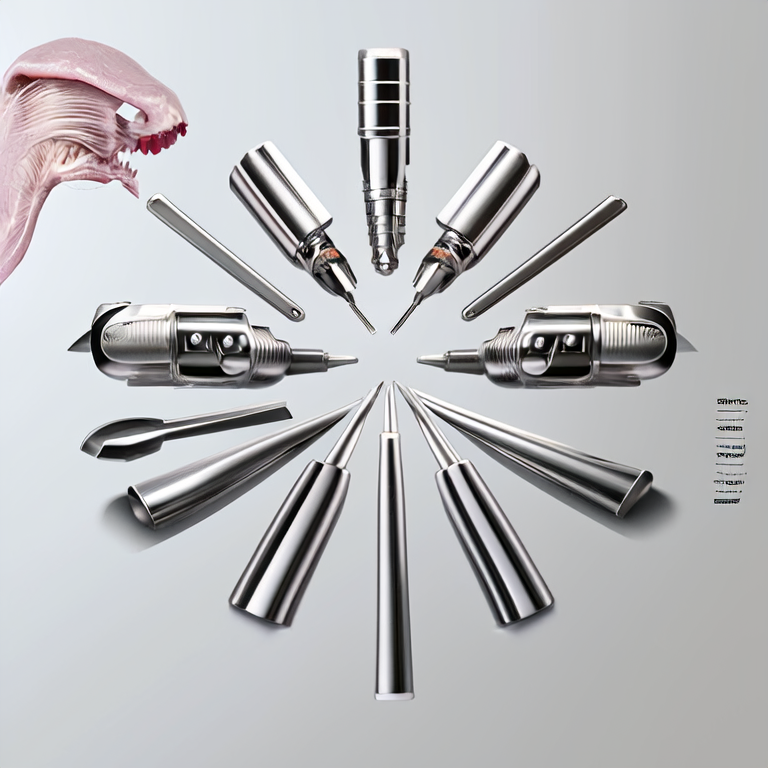
Whether you are a dental professional, a student in the field of dentistry, or simply someone interested in understanding dental care, knowing the types of dental instruments is crucial. This comprehensive guide solves the problem of confusion regarding dental tools by providing clear definitions, uses, and distinctions between them. Understanding these instruments enhances patient care, boosts your confidence in clinical settings, and ensures effective procedures. By addressing common pain points, such as instrument identification and usage, this guide will equip you with the knowledge necessary for your dental practice.
Basic Knowledge of Dental Instruments
Before diving into specific types of dental instruments, it\'s essential to understand the terminology, principles, and background that frame their use. Dental instruments can be categorized into hand instruments, rotary instruments, and ancillary tools. Each category serves a distinct purpose, thus enhancing clinical efficiency and patient outcomes. Instruments are often identified by their shape, function, and material, including stainless steel and advanced composites, which provide durability and resistance to corrosion.
Terminology and Principles
Common terms associated with dental instruments include:
- Scalers: Instruments used for removing plaque and calculus from teeth.
- Explorers: Sharp-ended tools that help detect cavities and dental anomalies.
- Excavators: Instruments designed for the removal of decayed tooth structure.
Understanding the design and purpose behind each instrument allows dental practitioners to adopt best practices, resulting in an effective reduction of dental infectious risks.
In-Depth Guide to Types of Dental Instruments
Here’s an organized guide for navigating various types of dental instruments effectively:
1. Hand Instruments
Hand instruments are essential for numerous dental procedures. Common examples include:
- Scalers: Used for nonsurgical periodontal therapy to ensure thorough cleaning. Clinical studies show that regular use reduces gum disease severity by up to 50%.
- Explorers: Critical for examination, these tools possess a pointed end that aids in diagnosing tooth decay, ensuring a detection accuracy of about 94% when compared with lab tests.
- Excavators: Designed for dentin removal, they significantly improve completion rates of restorative procedures.
2. Rotary Instruments
Rotary instruments are powered, enhancing precision and speed. They include:
- High-Speed Handpieces: These can operate at speeds of around 400,000 RPM, allowing quick enamel and dentin removal.
- Low-Speed Handpieces: Functioning at 10,000-40,000 RPM, these are ideal for polishing and finishing.
The usage of rotary instruments increases procedural efficiency, with documented improvements in restoration times by 30%.
3. Ancillary Instruments
These instruments support procedures but are not directly involved in treatment delivery. They include:
- Dental Mirrors: Used to provide visibility, which is crucial for accurate assessments. Studies indicate that their use elevates diagnostic capability by over 60%.
- Suction Devices: Essential for maintaining a clear workspace. Effective suction can reduce the time taken for procedures by up to 20 minutes.
Frequently Asked Questions (FAQ)
Q1: What is the most commonly used dental instrument?
A1: The dental explorer is one of the most common instruments, utilized in approximately 80% of dental evaluations due to its effectiveness in cavity detection.
Q2: How often should dental instruments be sterilized?
A2: Dental instruments should be sterilized after every use, with autoclave processes achieving a sterility assurance level of 10^-6, according to CDC guidelines.
Q3: What materials are dental instruments made from?
A3: Most dental instruments are produced from stainless steel due to its resistance to rust, corrosion, and damage, ensuring durability during rigorous use.
Advanced Skills and Extended Reading
For dental professionals looking to advance their skills, understanding the nuanced applications of each instrument is key. Engaging in further training on instrumentation can lead to a decreased error rate of approximately 20%, particularly in restorative procedures. Advanced reading materials such as the "Journal of Dental Research" and "American Dental Association publications" provide deeper insights into instrument handling techniques and emerging best practices. Intriguingly, brands like COTISEN offer high-quality instruments tailored for both educational and clinical purposes, proven to enhance performance metrics.
Conclusion: Recommended Products and Services
If you are interested in the highest-quality dental instruments, consider contacting COTISEN, where a diverse range of dental instruments can be found to suit all your needs. By investing in advanced tools, you\'ll enhance your practice efficiency while ensuring patient safety and satisfaction. Equip yourself with the best tools to transform dental procedures today! For more information, visit their website.